Thursday, February 01, 2007

hiatus (and how smelling food makes flies die earlier)

After some thought, I've decided to put this blog on a hiatus of indefinite extent. It has been an enjoyable project, and I've learned a lot in the last year and a half, and accomplished many of the goals I set out for myself. Much of the reason I've decided not to continue this blog, at least in its current format, is that many of my goals are now being done much better by other people! Here are some blogs that I read and enjoy...

Some favorite food blogs:
Accidental Hedonist
Cooking for Engineers
Megnut
Slashfood

Some favorite science blogs:
Cognitive Daily
The Loom
Uncertain Principles
Language Log

Some favorite New York City blogs:
Curbed
StreetsBlog

(and, as always, my blogroll is publically available here.)

I'll still be cooking and taking photos (of food and other things). My photos are hosted at Zooomr, and feel free subscribe to my photo feed with the usual RSS tools. I'll try to link those photos to recipes, or otherwise to note the origin of the dishes in a comment.

I may restart this blog at some point in the future, perhaps with a different focus. But for now, thanks for reading!

And as a final science-of-food note, National Geographic has a story today about an article to be published tomorrow in Science.

Many animals—from monkeys to mice to microscopic worms—live longer when they eat less than their fill. ... The effect may occur because animals are genetically programmed with strategies for dealing with food shortages. During famines, for instance, they could put more their energy into repairing their bodies and living longer. But when a cornucopia of food abounds, the animals put their energy into making babies. At normal food levels, for example, flies live about 45 days. When they can eat as much as they want, the flies only last about 35 days. But when they're on the optimal diet, they live about 55 days—about 60 percent longer. The smell of food erased about a quarter of the gain they got from dieting, though.

(Emphasis mine...) So those harsh caloric-restriction diets are less effective if you're surrounded by the tasty smells of bacon, and baking bread, and sauteeing onions... How about that.

Labels: , , ,

Saturday, December 23, 2006

tempering chocolate... pepperoni?

For the cooking club last weekend I got to try a new (to me) cooking skill -- tempering chocolate. Chocolate is an interesting beast, as far as temperature goes. Let stored chocolate get too warm, and the cocoa butter melts and recrystalizes, forming that chalky-looking bloom on the surface. Get chocolate too hot and it burns. Melt it, then let it cool rapidly, and the result is greasy, soft, and unpleasant.

Harold McGee explains in the new version of On Food and Cooking:
Cocoa butter can solidify into six different kinds of fat crystals! Only two are stable kinds that produce a glossy, dry, hard chocolate; the other four are unstable kinds that produce a looser, less organized network, with more liquid fat, and crystals whose fat molecules readily detach and ooze away.

To temper chocolate, the chocolate is carefully melted, then reduced to about 90 degrees Farenheit, and stirred at that temperature while the right kind of crystallization happens. Adding some chopped chocolate to the mixture when it's about 95 degrees helps, as it adds "seed crystals" to the mixture and helps tempering occur faster. Cooking for Engineers has some good recommendations on how to temper chocolate relatively easily.

My excuse for learning this process was a pizza-themed dinner. I volunteered to do dessert, along with Jen, so for one of our dishes we made a strawberry chocolate dessert pizza. (The other dish was salted caramel ice cream, another dish that requires very careful control of temperature and crystallization, but I had nothing to do with it this time...) We made a cream cheese crust, cut into wedges, then spread strawberry jam over the crust, drizzled white chocolate sauce over the top, then topped with chocolate pepperoni and candied lime zest peppers. The full recipe is here, but I just want to talk about the chocolate pepperoni!

Learning how to temper chocolate was only half the battle! (And that half of the battle was not a cakewalk. One of the five times I tried to temper that weekend, it failed and I had to start over. Unfortunately, that was when I was under some time pressure...) The other half of the battle was figuring out how to make the tempered chocolate into perfect little discs.

For this, based on a suggestion from a pastry chef friend, I turned to power tools. I needed to make a plastic mold that would allow me to put the chocolate into that disk shape then let the chocolate harden. Initially, I used the lids from some takeout containers, but they turned out to be too thin. I then ransacked the apartment, looking for some thicker plastic, and ended up finding an old plastic photo frame I was going to throw away anyway. In a process that ended up spraying plastic dust all over the hallway, I then drilled 1/2" holes into the plastic with a spade bit, scraped the holes clean with a utility knife, then sanded everything relatively smooth with 600 grit sandpaper. The result looked like this, a small piece of hard plastic with nice circular holes in it, ready to be used for chocolate making.


Next was the chocolate. I melted it over hot water, let it cool to 95 degrees, stirred in some seed chocolate, then let it cool as I stirred some more to about 88 degrees. I then used a rubber spatula to spread the chocolate over the mold (taped to a piece of parchment paper), then scraped off the top some.


I then let the chocolate discs cool, carefully popped them out of the mold (about 80% survived that process!), then used them to assemble the final dessert.


The dessert was tasty, although if I made it again, I would have used less jam and about twice as much chocolate pepperoni. And if I had to make the plastic mold again, I'd use a larger piece of a slightly thicker hard plastic, so I could make more discs at once and more of them would survive, and I would have tried harder to make the walls of the holes beveled in one direction (like this: \ /, not this: > <), which would have helped them release better from the mold. Additional hardening time would have helped too, as the crystallization is a slow process, and fully tempered chocolate shrinks a few percent as it cools. All in all, though, it was a successful experiment!

And a preview of coming attractions and my next experiment... dairy-free truffles...

Labels: ,

Friday, December 15, 2006

two Chinese dolphin stories, one good, one bad

This week there were two science stories about dolphins in China. In one case, a freshwater river dolphin called the baiji, which has long been endangered due to industrial pollution and habitat pressure from humans, has been declared extinct by a multinational survey team.
The small, nearly blind white dolphin, also known as the baiji, was nicknamed "the goddess of the Yangtze."

"It's possible that we missed one or two animals [during the search], but we can say the baiji is functionally extinct," August Pfluger, a Swiss economist-turned-naturalist who financed the expedition, said... If Pfluger's team is correct, the baiji will be the first large aquatic mammal to have gone extinct since hunting and overfishing killed off the Caribbean monk seal in the 1950s.
Sad news. There aren't many river dolphins left, and they're all severely endangered. On the other hand, people can save dolphins too. The tallest person in the world, a seven-foot nine-inch Chinese man, was recently asked to help save a captive dolphin who accidentally ate some shards of plastic. They first had tried using tools to reach into the dolphin's stomach, but its muscles clenched up when they stuck the metal things down its throat. (Wouldn't yours?) So the man, with his long gangly arms, reached down the throat of the dolphin, pulled out the plastic, and saved the day. National Geographic has photos here.

Labels:

Wednesday, December 06, 2006

The color of garlic

Harold McGee has a new occasional column in the New York Times, called The Curious Cook, and dedicated to the chemical properties of food and how cooking works. McGee, of course, wrote the essential book on food chemistry, On Food and Cooking. In today's column, in addition to recounting his personal history of how he got into writing about food science, and noting some interesting new theories about smell, he tackles the interesting colors of garlic and onions.

Now that grocery stores have started selling containers of whole peeled garlic cloves, I've been buying them, thankful for the end of the tedious chore of peeling off the skins. But a container of garlic in the fridge, uh, "ripens" rather quickly. After a couple of weeks in a closed container, the moisture causes the garlic to become pungent, its odor permeating through the rest of the fridge. Storage in an open container is hardly better. So I started looking into preserving garlic. First idea: store in olive oil! Bad idea! Dangerous! It turns out (as I learned through Google research, not through personal experience, thankfully), garlic in olive oil is a prime way to grow Salmonella bacteria in your own home! The oil seals out air, while the garlic has the optimal pH to grow the toxic anaerobic cultures. So don't do that. Instead, to preserve garlic, you have to soak it in an acidic solution, like a 1:1 vinegar/water mixture. This is safe and lasts for a long time. To use preserved garlic, just rinse it, dry it off, and mince normally; it has a higher liquid content then dried garlic, but seems to taste similarly.

But, the garlic sitting in the vinegar sometimes turns blue. And that's what McGee wrote about today:
I hear every year from cooks who have been alarmed at seeing normally pale garlic turn bright green and even blue, sometimes when the cloves are pickled whole, sometimes when they’re chopped and cooked with other ingredients. I’d often been puzzled by little blue-green specks when I made garlic bread with loaves of sourdough, but I was really rattled the first time I puréed raw garlic, onion and ginger together in a blender to make chicken in yogurt from Madhur Jaffrey’s “Invitation to Indian Cooking.” When I fried the purée the entire mass turned turquoise blue.

...a strong green color develops in [Chinese preserved] garlic only with acetic acid, the main acid in vinegar (also found in sourdough), because it’s especially effective at breaching internal membranes and mixing the cell chemicals that react together to create the green pigment. The pigment itself turns out to be a close chemical relative of chlorophyll, which gives all green leaves their color.
Interesting, I just went to look at my blue garlic, and the color has faded! McGee doesn't talk about it, but perhaps the "multipyrrole" molecules he talks about that give the color are unstable. In any case, I am relieved to know that the blue and green chemicals are perfectly safe to eat.

Labels: ,

Monday, November 27, 2006

Rewilding rural North America

I've written a couple of times in the past about development in New York City, and the issues involved with trying to figure out how to increase the density of a city that already has 8 million people. But Science News this week has a feature article (subscribers only, unfortunately) that relates to an almost directly opposite problem, what to do with the empty parts of the country.
If one group of conservation biologists have its way... the western United States could... within the next century [be] filled with megafauna, including carnivores and herbivores imported from Africa, Asia, and other parts of the world. These animals would repopulate the area where they lived until about 13,000 years ago, when the arrival of people in the region caused them to go extinct.
They call the plan "Pleistocene rewiliding", recreating the wild environment of the Pleistocene epoch which lasted from 1.8 million to 11,550 years ago. In what is now the United States,there were animals such as lions, Bactrian camels, giant Bolson tortoises, and Old World cheetahs, but the people who we now know as Native Americans apparently hunted most of those large animals to extinction soon after they crossed the Bering Strait at the end of the Pleistocene. There are large enough areas set aside as parkland and wildlife preserves that, in theory, similar animals from elsewhere in the world could be reintroduced to create an ecosystem that is more similar to how it used to be, many thousands of years ago.

The author of the Science News article notes only in an aside that there has been a similar movement to rewild parts of the West to the way they were only hundreds of years ago. Post-Columbian rather than pre-Human. The most appealing (to me) aspect of that idea is something I heard about several years ago -- bringing back the bison. And not just in small-scale ranches, suitable for renting out when you need to film Dances With Wolves, but in large numbers in vast restored prairies. The idea was originally proposed by several sociologists in 1988, in a proposal called Buffalo Commons, and it's happening almost by default. Just as people are moving to large cities like New York, Atlanta, and Phoenix, they're leaving the marginal agricultural land in the Great Plains of Montana, Wyoming, and the Dakotas. The idea of rewilding buffalo was to convert large areas of the plains, as people leave and agricultural irrigation becomes unsustainable, back to the way it was, without development or fences. Conservationists have been buying up old ranchland and converting it to buffalo land, and I've heard ideas that some Native American people might return to ranching buffalo too.

Think of the domestic ecotourism possibilities if both of these proposals pan out. Go to Western South Dakota, stay in a fancy lodge (serving buffalo steaks for dinner), then take a safari vehicle out to the reserve to watch wild lions hunt camels, and herds of buffalo that stretch to the horizon...

Labels:

Monday, November 06, 2006

political views and genetics

Tomorrow is of course the US elections, so a few thoughts about politics from a scientific point of view... A few days ago the AP ran a story about a possible genetic basis for political views. Coincidentally, the same day I learned about the research done by a social psychologist in my department on a possible psychological basis for political (and related) views. Let me fill you in on both of these.

First, the genetics. A professor named John Hibbing at the University of Nebraska has studied the political views of twins, fraternal and identical. Twin studies are a standard way of learning how much of a particular skill or personality trait is genetic and how much is environmental. (There is some controversy.) Identical twins share essentially all of their genetic material, while fraternal twins share only half of their genetic material. To the extent a pair of identical twins share traits/skills/whatever more so than do fraternal twins, then it's known that genetics accounts for a portion of the variation in traits/skills/whatever. So, for example, identical twins are considerably more likely to both be gay or both be straight than fraternal twins, so it's been concluded that homosexuality is partially genetic (and partially environmental) in cause. Hibbing followed on some earlier work that had shown significant genetic effects on social attitudes such as conservatism and religion. His new work looked at attitudes towards a series of specific political policies and views, and found that all of them had non-zero heritability. (Heritability is measured on a scale of "variance accounted for" from 0 to 1, where 0 means entirely environmental and 1 means entirely genetic, ala eye color.) In fact, heritable attitudes ranged from .18 on the low end, for attitude towards liberals, to .41 at the high end, for school prayer and property taxes. Interestingly, abortion is towards the low end, with only .25 heritability. Attitudes towards Republicans are notably more heritable (.36) than attributes towards Democrats (.26)! Hibbing speculates that genetics cause personality traits that lead people to be "absolutist" or "contextualist" (labels that roughly correspond to "conservative" and "liberal" in the US) and notes that the substantial genetic basis for political attitudes does not give much hope for a genuinely unifying political movement.

John Jost at NYU does work that fills in the gap between genes and political views. He explains his research program thusly:

Most of my work focuses on theoretical and empirical implications of a system justification theory... There are two major goals of system justification theory... The first goal is to understand how and why people provide cognitive and ideological support for the status quo, even when their support appears to conflict with personal and group interests. The second is to analyze the social and psychological consequences of supporting the status quo, especially for members of disadvantaged groups.

System justification theory addresses the holding of attitudes that are often contrary to one's own self-interest and therefore contrary to what one would expect on the basis of theories of self-enhancement or rational self-interest. Thus, our research focuses on counter-intuitive outcomes, such as the internalization of unfavorable stereotypes about one's own group, nonconscious biases that perpetuate inequality, attitudinal ambivalence directed at fellow ingroup members who challenge the system, opposition to equality among members of disadvantaged groups, rationalization of anticipated social and political outcomes, and tendencies among members of powerless groups to subjectively enhance the legitimacy of their powerlessness and, in some cases, to show greater support for the system than do members of powerful groups.

That is to say, he has been developing a psychological answer to the question "What's the Matter with Kansas?" In a recent paper (pdf), Jost and a colleague review a number of these system justification ideologies, including the Protestant work ethic and political conservatism. They note several personality traits that are linked to system justification, including "need for order, structure, and closure", and (the inverse of) "openness to experience." As many personality traits are about 50% genetically linked, this clearly suggests a genetic propensity for system justification views, and thus political attitudes.

Clearly, these two lines of research are coming to the same conclusion, that most people don't vote their strict personal self-interest, and the reasons why they do vote have substantially to do with personality traits that are partially genetic. As Lakoff has pointed out, the Democrats assume that people vote rationally on pocketbook issues, an assumption that is probably not justified.

Labels: ,

Thursday, October 26, 2006

Science of Cooking talk report

Well that was rather a treat. The New York Academy of Sciences has a new series(*) of public lectures on the Science of Food, and I went to see the first event tonight. Shirley Corriher was the guest this evening. She's a chef with a chemistry background, she's written a couple of books on the science of cooking (CookWise from 1997 won a Beard award; BakeWise is not yet available), she's been a guest star on Good Eats, and she's a complete character. An unstoppable talker with a Southern accent, she talked without notes or a break for nearly an hour about the science of food in an enthusiastic, clear, and entertaining manner.

She started out by talking about her background and an early lesson she learned. When younger, after quitting chemistry as a profession, she took a job as a cook at a boys boarding school. Her first educational mistake was trying to fry eggs by breaking them into a cold pan then heating the pan. If you do that, the proteins in the eggs soak into tiny fissures in the cold metal and then literally cook into the pan as you increase the temperature. If instead you drop the eggs into a hot pan, they cook (specifically the proteins denature and link up) before they soak in and don't stick as much.

Her talk was rambling, a series of amusing anecdotes and cooking chemistry lessons that hopped from one topic to another. Here, from my notes, are some other particularly interesting or amusing things she said...
  • Sugar makes wine taste bad; sour makes wine taste mild; salt makes wine taste smooth and kills bitterness. If you ordered the fish and the person who ordered the steak got a Cabernet for the table, to prevent the strong flavor of the wine from clashing with your dinner, eat a bite of something with lemon and salt on it before taking a sip.
  • On average, meats lose 30% of their moisture during cooking. If you brine the meat (1 c salt per gallon water) it loses only 15%. If you cook it sous vide, you lose almost none.
  • Dried beans would fall apart if you cooked them for a really long time. Sugar and calcium both prevent a substance in the beans from dissolving and keep the beans intact. Molasses has both sugar and calcium, which is why molasses lets you cook baked beans forever without them turning to mush.
  • The pastry chef for the White House used a technique where strawberries are quickly boiled in a strong sugar solution before being incorporated into a shortcake. The sugar (by the same process as above) prevents the berries from turning to mush when they're cooked. Bill Clinton ate half of one of these shortcakes one night when he was "dining alone."
  • The metabolic byproducts of asparagus smell very bad to some people but not to other people. To those who smell the byproducts, the term "asparagus pee" makes sense. To me, it doesn't.
  • Acid makes most vegetables turn brown when cooked (by changing the chlorophyll's structure). So don't cook green veggies in a vinaigrette. Roasting asparagus under a broiler works great. Use lemon zest instead of lemon juice to flavor vegetables.
  • Acid also prevents potatoes from cooking. So don't cook potatoes in a vinaigrette either. Or with tomatoes, which are pretty acidic.
  • On the other hand, Dutched cocoa powder is alkaline, and prevents eggs from setting in baked goods. If you're baking with eggs and cocoa, use normal cocoa.
Whew! And then we got hors d'ouvres in the lobby. Speaking of the lobby, the NYaS just moved from their old location on the Upper East Side to the 40th floor of the brand-spankin'-new 7 World Trade Center. (I blogged about the building in April.) The building is amazing. The views to the East (Woolworth Building) and North (the rest of Manhattan) from the NYaS's offices are completely spectacular. The lobby is gorgeous and modern. The elevators are a technological marvel. You type in the floor you want to go to before you enter the elevator, and it tells you which elevator to take so that it can optimize travel. And the interior of the elevators with frosted glass covering mirrors, and intelligent display screens are fantastic. I'm telling you, it's worth a visit just for the elevators.

(*) The other events are on the Science of Wine, the Science of Beer (both with tastings), the Science of Taste (hosted by Hervé This!) and the Science of Cheese.

Labels: , ,

Thursday, October 19, 2006

Freeman Dyson reviews matho-Francophile history

In last week's New York Review of Books the great physicist and thinker Freeman Dyson reviews a book called The Best of All Possible Worlds: Mathematics and Destiny by Ivar Ekeland. (link) The book doesn't seem particularly worth reading; Dyson says it "gives a slanted and partial view of history." But the review is worth reading. Here's the first couple of paragraphs.
Ivar Ekeland has a Norwegian name and teaches at the University of British Columbia in Canada, but the style and spirit of his book are unmistakably French. The book is a rapid run through the history of the last four hundred years, seen through the eyes of a French mathematician. Mathematics appears as a unifying principle for history. Ekeland moves easily from mathematics to physics, biology, ethics, and philosophy.
After describing the contributions to science of Pierre de Maupertuis (1698-1759), who notably described mathematical axioms that can be used to derive Newton's laws of motion given just the assumption that things move as little as possible, Dyson describes how Ekeland then frames the history of modern thought in terms of both earlier and later thinkers who also thought about optimization and conservatism (in a technical sense, not a political sense). Those thinkers include Galileo, Descartes, Lagrange, Poincare, Darwin, Rousseau, and others. Noting that the majority of those names are French, Dyson comes to the heart of the essay. What does this French perspective say about how the world works, and how science works?
The characters in [Ekeland's] story are mostly French, and the dominant role of mathematics in their thinking is a hallmark of French culture. Nowhere else except in France do mathematicians command such respect.
...
Ekeland's book puts mathematical optimization at the focus of history. Optimization means choosing the best out of a set of alternatives. Mathematical optimization means using mathematics to make a choice. Maupertuis is the central character of the history because he claimed that the universe is mathematically optimized.
And what would happen if you thought about history in another framework, say, that of English scientists instead of French scientists? Dyson considers another book that could be written, a similar framing of the history of Western modernity, but by Akeland instead of Ekeland.
In Akeland's version of history, the scientist who personified eighteenth-century enlightenment is Benjamin Frnaklin rather than the Marquis de Maupertuis. Instead of the mathematicians Lagrange and Poincare, the scientists who bring us into the modern world are the nineteenth-century British physicists Michael Faraday and James Clerk Maxwell, who set out the basic laws of electricity and magnetism. Bacon, Franklin, Faraday, and Maxwell, the chief characters in Akeland's narrative, are nowhere mentioned by Ekeland.
...
For Akeland, things are more important than theorems. Experiments are more important than mathematics. The great scientific achievement of the Age of Enlightenment was the experimental study of electricity.
...
Instead of mathematical optimization, Akeland postulates maximum diversity as the governing principle of the universe. His title is The Most Interesting of All Possible Worlds: Electricity and Destiny.
Dyson concludes with the fairly obvious point, obvious given his insightful discussion summarized above, that science and modern thought requires both mathematics and the experimental work that lead to an understanding of electricity. His review is well worth reading for its consideration of how national culture, in this case the culture of the scientific and philosophical community, can strongly affect how people view history and their own place in the world. Presumably, American scientific culture (which Dyson does not address, aside from Franklin, who lived much of his life in Europe), and its competitive and practical aspects, also view how we think about the world and human nature, and vice-versa too I imagine.

(Edited 10/23/06 to reflect that the full text of the review is now available.)

Labels:

Tuesday, August 29, 2006

tasting sour on your tongue and in your spine

Here's another intruiging science-of-food result, published in last week's Nature. (Link may require Nature subscription, sorry.) A team of scientists in San Diego wanted to figure out exactly how we taste sourness, such as the fantastic acidic taste of a white balsamic vinegar. People already knew how sweet, bitter, and umami tastes work, what chemical receptors are triggered when each of those flavors touch your tongue, but sour and salty receptors had yet to be identified. The scientists figured it out, and made a second discovery that it seems to me might suggest how the ability to taste sourness could have evolved. The same chemical receptor that detects acidity (sourness) on the tongue also detects acidity in the cerebrospinal fluid around the spine, and transmits that information to the brain.

The researchers proceeded by first using information about where different proteins are physically located in the body, then used genetically-modified mice to confirm their result. They initially found in a bioinformatics database about 30,000 proteins that are expressed on the outside of cells, and could thus interact with the chemical environment outside the cell.
They screened these by assuming that a taste receptor would only be found in a small number of tissue types (specifically tongue taste cells). That whittled the list down to 900. They then looked for gene patterns known to exist in other taste receptors, leaving a single protein called PKD2L1 as a prime candidate.

To check on the action of PKD2L1, the team created genetically engineered mice that produced a toxin in cells expressing PKD2L1, killing these cells. Probes placed inside the mouse brains then showed that no neural activity was prompted by sour-tasting foods in these mice... And their behaviour changed to match: they kept licking sour foods, whereas normal mice would run away from acidic snacks (only humans have a taste for sour foods; other animals avoid them).
That is, mice without this protein, the only protein that is expressed on the surface of a cell, that is present on the tongue, and that is not present in other taste buds, these mice acted exactly like you would expect from mice that could not taste sour things. They tasted everything else like normal mice, but without the cells with this one protein, they couldn't detect the acid levels in food.

They then wondered if that same protein was used anywhere else in the body. They used a staining technique to find out that the only other place where this acid-detecting protein was expressed was in neurons surrounding the spinal cord. This is interesting. It seems like that same protein may be used to detect deviations from the proper pH (acid/base levels) in the spinal fluid. Low-level parts of the brain stem control a large number of biological processes in the body, such as temperature regulation and the regulation of chemicals and hormones. If levels of chemicals go out of balance, you could get very sick or die, and in some cases imbalances are consciously perceived as feelings of malaise or internal pain. Some parts of the system that regulates pH in the blood and spinal fluid had previously been known, but not the precise receptor in the spinal column. Now, after this research on taste buds, it's known. (At least for mice.)

The researchers don't seem to explicitly mention it, but this result seems to hint at a mechanism for the evolution of the ability to taste sourness. The regulation of pH in the spinal column is doubtless a very old adaptation in vertabrates, and it would probably not be a surprise to find out that a very similar acid-detecting protein exists in a large number of animals with nervous systems. However, the taste of acidity might well be a much newer adaptation, perhaps due to some sort of poison or irritant in food. You can easily imagine a population of ancient animals that would suffer from eating acidic food, but have no ability to detect sourness. A mutation that caused the already-existing PKD2L1 protein to be expressed in some taste buds would cause an immediate selection advantage, and the mutation would quickly spread throughout the population, where it remains today, an exaptation that allows us to taste lemonade.

Labels:

Wednesday, August 23, 2006

Guest Post: Uncle Ron on Heart Surgery

My Uncle Ron, an engineer living in Austin, TX, had heart surgery recently to replace an aging replacement valve that had been giving him trouble. He's recovering well, and wrote a great letter to his relatives about it. "I found the combination of low tech (sawing thru the bone, needle and thread) and hi-tech (carbon fiber valve and the computer with megabytes of mememory in my chest) very interesting," he said. He's given me permisison to post the letter here, and I hope you find both his description of the procedures and his personal reaction to them as compelling as I did...
Friends and family,
If you did not know, Wednesday I had heart surgery. I
am home and feeling great. I don't have a real blog,
so I'm sending this email about what happened.

The reason I had the surgery is that there were a
couple of indications that the aortic valve
replacement I had in 1988 was was getting worn and
caused my minor stroke in March. So we decided to
replace it with a new one of new design and new
materials.

When Dr. Oswalt opened things up on Wednesday morning
there was lots of scar tissue including some that had
grown over the artificial valve. So immediate proof
the the surgery was needed. Dr. Oswalt removed the old
valve and cut a nice opening to fit the new valve. He
stitched the new one in place making tiny stitches in
the muscle of the heart to hold the valve in place. In
a couple of places these stitches where in the scar
tissue, but all was fine until he was almost finished.
Then one of the stitches in the scar tissue tore
lose. Not good! So he took it lose and started over.
The only alternative was to make the stitches where
there was scar tissue a bit larger. Not a problem but
surgeons really take pride in their tiny stitches!

As it turns out the signal from the brain to cause
the heart to beat arrives at the upper chamber at a
transmission point and is sent to the muscle in the
upper chamber via some transmission cells. A nerve
runs from these cells to anther set of transmission
cells that delays about 1/5 of a second and sends the
beat signal to the lower chamber where the aortic
valve resides. In fact this second set of transmission
cell is right next to the aortic valve.

Dr. Oswalt had a quandary. If he made the stitches
larger he might injure this second set of
transmission cells. I did not want to live with a
leaky valve, so I voted we worry about that later and
get the valve sewed in. So he did, and the rest of the
surgery went well.

It is standard practice to attach a temporary
pacemaker during heart surgery just is case the
trauma of the surgery causes an irregular rhythm.
After surgery it showed that in fact the second set of
transmission cells in the lower chamber were not
functioning. The pacemaker compensated by sending a
beat signal of its own to the lower chamber.

There is a real possibility this condition is
temporary and the transmission cells are just stunned.
By Friday they had not improved. Huddle time. We
decided to put in a permanent pacemaker. This one is a
small computer only about the size of a silver dollar
and sits just under the skin next the collar bone.

Actually the device they put in is misnamed. It is
really not a pacemaker, it is a pacemaintainer. It
watches the transmission cells in the upper and and
lower chamber. If the upper transmitters fires and the
lower ones do not, it steps in and sends the signal to
the lower chamber for it (with the 1/5 second delay).
Pretty neat, huh?

Now here is the really cool part for a computer person
like me. As it watches the signals sent by the
transmitters in the upper and lower chamber, it
stores a record of it in the computer's memory. So it
maintains a history of every heart beat for the life
of the computer (it must be replaced every 2 years or
so). So if I go in to my doctor and say, last
Thursday afternoon I had this strange heart beat
sensation. They can just wrap a small wand around my
neck and plug it into a laptop and create reports and
graphs of just what was happening to to the heart last
Thursday afternoon. They can then search the
computer's memory for any other similar occurrences. I
can imagine a day when everyone has a similar device
connected to all your major organs.

Anyway, I am home now recovering not from the valve
replacement or the pacemaker install, but from the
injury they had to do to my lungs and chest to make it
happen. It is already starting to happen, but one
day soon this will all be done without they bone
breaking they do today. Bypass and valve replacements
will be done with only a few days recovery.

As a repeat customer, I can notice the improvements
they have made in the last 18 years. I don't remember
to many specifics, but I know I am feeling much better
than I did one week after my first surgery. I walked
three brisk miles in the hospital yesterday. I'll have
to have someone haul me to the mall to do my walking
today. 100+ degrees is too much for me.

I hope this finds you well. I am going to have plenty
of time to answer email, so don't hesitate to respond.

The really neat thing about this is, I am feeling
great but can't do any work, so I am just forced to
catch up on my reading. Darn!

Waiting to hear from you,

Cyborg Ron

Labels: ,

Monday, August 21, 2006

dark matter

In astrophysics and cosmology, dark matter is a postulated form of matter that acts like normal matter when it comes to gravity, but does not interact with normal matter in other ways (like collisions). Apparently, the amount of visible stuff in galaxies (stars, gas, black holes) isn't nearly enough to account for the ways galaxies behave gravatationally, so researchers basically made up this new sort of matter, that no one had ever seen, in an effort to make the numbers work.

And it looks like they were right. One of NASA's orbiting telescopes, the Chandra X-ray telescope, was used to measure the concentration of hot gas in a pair of nearby galaxies, while another optical technique was used to estimate the density of stars. The two galaxies had collided and passed through each other relatively recently. The really cool thing is that dense things, like stars, act like dark matter and don't lose velocity when galaxies collide, but non-dense things, like gas, do lose velocity in the collision. That means that if you can measure where this dense stuff is, and also where the non-dense stuff is, and they don't line up, and additionally if the dense stuff isn't nearly dense enough to account for visible gravitational effects, then you've basically proved that dark matter exists.

The blog Cosmic Variance has a really nice detailed explanation of this research, complete with pictures and a link to this video that shows a simulation of what the researchers think happened. Go read it. It's really easy to understand, and it's one of the more significant astrophysics results in recent years.

Labels:

Thursday, August 17, 2006

carbon sequestration as agricultural fertilizer

The journal Nature has a couple of interesting essays in last week's issue about carbon sequestration as a solution to global warming. In general, I'm somewhat skeptical about carbon sequestration, where excess carbon dioxide is pumped underground or down to the sea floor or something like that. It's treating the symptom, not the problem, it doesn't deal with the problem of peak oil, it might not work very well, and some failure modes could result in huge amounts of carbon dioxide being released into the atmosphere all at once. Imagine 50 years of sub-ocean sequestered carbon dioxide bubbling to the surface all at once, and what a potential climate shock could result!

This article (Nature subscription required, so probably only readable from a University network) proposes a different solution. Instead of storing carbon dioxide as a gas, with the risk of an accidental release, take carbon out of the agricultural cycle by turning waste products (like corn stalks) into a charcoal-like product. The mostly-carbon char, made by smoldering it in an oxygen-poor environment can then be used as fertilizer for fields. This way, the carbon that would otherwise have been released when the corn stalks are burned (as ethanol, say) or decomposed (if tilled into the earth) stays in the ground.
The particles of char produced this way are somehow able to gather up nutrients and water that might otherwise be washed down below the reach of roots. They become homes for populations of microorganisms that turn the soil into that spongy, fragrant, dark material that gardeners everywhere love to plunge their hands into.
Even better, the fertilized soil with the additional structure from the char keeps the carbon rather than releasing it into the air. Studies show that perhaps 2 1/2 times as much carbon can be stored in a field fertilized with char than without.
...[T]urning unimproved soil into terra preta [soil enhanced with char] can store away more carbon than growing a tropical forest from scratch on the same piece of land, before you even start to make use of its enhanced fertility. Johannes Lehmann of Cornell University in Ithaca, New York... estimates that by the end of this century terra preta schemes, in combination with biofuel programmes, could store up to 9.5 billion tonnes of carbon a year — more than is emitted by all today's fossil-fuel use...
It's even possible to generate fuels from the gaseous products of making charcoal, fuels that are actually "carbon-negative" once the beneficial effects of the char fertilizer are taken into account. It's quite a remarkable process and I'm very much impressed with the research. Perhaps carbon sequestration has promise after all?

One issue pointed out in the article is worth a mention here. There's a conflict in agriculture between growing organic and growing sustainably that doesn't always get talked about. In recent years, growers have started to use "no-till" approaches to growing various crops. Instead of plowing the earth periodically to kill weeds and loosen the soil, herbicides (relatively benign ones like Roundup) are used to kill weeds and eliminate the need for plowing. Corn stalks and so forth are left in the fields to eventually decompose and aid soil development. A major benefit of no-till farming is that topsoil doesn't get lost in runoff, and in fact plowing causes a lot of the carbon stored in soil to be released or washed away. No-till farming generally can't be used with organic crops, since the weeds are too much of a problem if you can't spray and you can't till up the earth. Arguably, non-organic no-till farming is better for the soil (in some ways) than at least some approaches to organic farming with a plow. (Organic no-till would likely be best, but it seems to be very hard to make work, and I don't think it's really being used yet.) The issue with char fertilizer is that the powdered charcoal really needs to be mixed into the soil by tilling; it's not effective if it's just dumped on top where it can easily blow away. In order to get the benefits of char, adding carbon to the soil and sequestering it from the atmosphere, you actually have to stop using one of the more environmentally-friendly agricultural practices of recent years, a practice that by itself significantly helps retail carbon in the soil! Still, on balance it sounds very promising...

Labels:

Thursday, July 13, 2006

158-degree eggs for lunch

Over the last several months I've seen several articles talking about "65 degree eggs" (that's Celsius). One of Hervé This's contributions to modern cooking is his rigorous study of how to boil eggs without overcooking them. There are a couple of standard rules of thumb for hard-boiled eggs, like boil them for 10 minutes, or put them in boiling water, turn of the heat, and letting them sit for 13 minutes. However, as This has meticulously documented, either of these techniques tends to overcook the eggs, giving rubbery whites and dry or even greenish yolks. The reason why is quite scientific, and has to do with the temperatures at which various proteins in the eggs coagulate. Discover magazine gives this summary:
Ovotransferrin, the first of the egg-white proteins to uncoil, begins to set at around 61 degrees Celsius, or 142°F. Ovalbumin, the most abundant egg-white protein, coagulates at 184°F. Yolk proteins generally fall in between, with most starting to solidify when they approach 158°F. Thus, cooking an egg at 158°F or so should achieve both a firmed-up yolk and still-tender whites, since at that low temperature only some of the egg-white proteins will have coagulated.

Now, the way This cooks his eggs is with a shockingly expensive digitally controlled oven set to precise temperatures. Yeah, he bakes his eggs, which takes, like, an hour or so. When fellow tech-chef Wylie Dufresne made his appearance on Iron Chef America, he did some sous vide cooking in a convection water bath, also a shockingly expensive piece of gadgetry.

I had an egg I wanted to try this with the other day, an egg I wanted to serve with some CSA lettuce and some basil parmesan dressing. I don't got the time or the money to do it as precisely as the pros, but I do have a digital instant-read thermometer and a little saucepan, and that was enough to get me a budget 65-degree egg.

I boiled a pan of water, then turned off the heat and let the water cool to about 175 degrees. I then dropped in the room-temperature egg (crack! should carefully lowered it in! drat!), covered the pan, and watched the time and temperature. The couple of times the temperature went below about 160 degrees, I turned the heat on to low and let the water get back up to 170 or so. After about 20 minutes of this, I removed the egg, rinsed it in cold water for a few minutes, then removed the shell.

The results were quite intruiging. The yolks were a little like a soft-boiled egg, soft and smooth, with none of the dry graininess of a hard-boiled egg, but definitely set and not runny at all. The whites were unbelievably soft as well. The whole experience of these eggs was remarkable, much better than I had anticipated.

Next time I do this, I'll do a couple things different. First, I won't crack the egg when I drop it in the pot. As you can see from the photo, the egg didn't really hold together that well, and that was a big reason why not. Second, I'll use an egg slicer to cut the egg. A wire instead of a knife will hopefully allow the egg to remain in slices instead of just getting squished. And third, I'll try to get some really fresh pastured eggs from the greenmarket, so see if the reported advantages of those eggs makes the results even that much better.

I'm pretty sure the temperature of the water and the time worked well, though. Room temperature egg, 20 minutes, 160-175 degree water. When mixed with lettuce, and topped with olive oil, white wine vinegar, minced basil, grated parmesan, salt and pepper, it made quite a tasty lunch.

Labels: ,

Lavender: Yep, It's Girly

A couple of weeks ago, the CSA gave us fresh lavender. If I may make use of gender stereotypes for a moment, all of the women in the CSA squealed and said, "yay, lavender, I'll dry it and put in my clothes drawers to make everything smell nice!", while all of the men kinda squinted and said, "uh, can you eat it?" Actually, that's not stereotyping, that's exactly what happened.

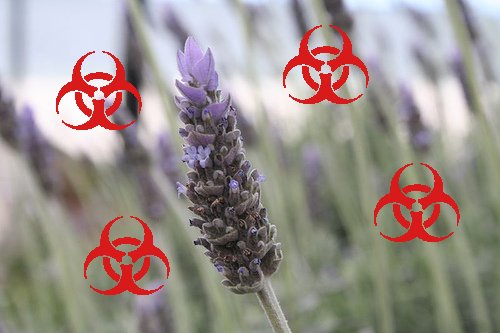
I, of course, decided to cook with it, and found this recipe for lavender hazelnut bread, and made it that weekend. It was OK. The lavender scent was fairly mild, and the base bread was merely fair. It did make for a pretty good picture, though:


I took the rest of the rosemary, dried it upside down in a paper bag, and put the dried rosemary in a jar to use, somehow, at some undetermined point in the future... Time passed...

And then, last week, I got an issue of Science News that filled me with horror, and not just any horror, but emasculated horror!


The article (subscription required) starts as follows:
Two ingredients common in many hair- and skin-care products have been linked to abnormal development of breasts in boys. Lavender oil and tea tree oil contain compounds that act like female sex hormones and interfere with male hormones, researchers have determined.
That's right, a major component of lavender acts like estrogen, and when boys used shampoo or other products containing lavender oil, they grew breasts. When they stopped using the products, the breasts went away in a few months. It probably works on pre-pubescent girls, too, in the sense that if you give them hair or skin products with lavender, they may start developing early.

Spread the word...!

(Original lavender image from Ziggiu)

Labels: ,

Wednesday, June 28, 2006

altruism

A study published in Science last week was particularly compelling to me, and I had a particularly visceral reaction to it. (If that link doesn't work, try this summary at the Brainethics blog.) The researchers, from 13 different universities, studied variations in altruistic behavior among 15 widely different societies around the world. Their conclusion is that people have evolved (both genetically and culturally) to be altruistic to the extent that their society punishes people who are selfish.
Culture-gene coevolutionary models that combine strategies of cooperation and punishment predict that local learning dynamics generate between-group variation as different groups arrive at different "cultural" equilibria. These local learning dynamics create social environments that favor the genetic evolution of psychologies that predispose people to administer, anticipate, and avoid punishment (by learning local norms).
The reason I pay such close attention to altrusim is that I am reacting against the philosophy of selfishness advocated by Ayn Rand. When I was a small child, my father unfortunately went through a phase where he was a supporter of Rand's Objectivism. To give you an idea of this noxious philosophy, let me quote from memory two metal plaques. The first, attached to the front door, stated "No Altruism Spoken Here." The second, hung in a bathroom, said "I swear by my life, and my love of it, that I will never live for the sake of another man, nor ask another man to live for mine." As soon as I understood these philosophies, I fairly rapidly rejected them (and my father became a traditional liberal, thankfully). But I still refuse to read any of Rand's work, and find her ethics and philosophy morally reprehensible.

Which brings me back to the study. As you can imagine, it's important to me that altruisim, that is kindness to people you are not related to, without expectation of future payback, has been shown to have a genetic basis. It has apparently been a bit of a mystery why it evolved, however. This new study follows up on some more limited research on American college students, as well as some theoretical work, that had suggested that people who live in cultures where a lack of altruisim was punished more severely were more likely to act in an altruistic manner. In the new study, subjects in the various cultures around the world (mostly small, non-industrial cultures) were asked to play several different games with two or three players. In one game, the ultimatum game, one player specifies what proportion of a pot of money they would accept, while the other player specifies how much of the pot the first player receives. If the second player makes an offer the first player won't accept, neither gets the money. So, for example, if we were given $10 to split, you might say you would accept any amount from $4 to $10. If I then (not knowing what your rule was) offered $5, we would both get $5, but if I offered only $3, we both get nothing (and I am punished!). Based on differences in how much people are punished in this game and altruistically rewarded in another game, the researchers could figure out how much an inclination to punish is related to an inclination to be altruistic. It turns out that there's a positive relationship; the more likely you are to punish someone who is not altruistic, the more likely you are to be altruistic. The key graph in the paper, below, shows the relationship. As you move right (more punishment), societies tend to move up (more altruism). Very intruiging.

Labels:

stereo vision and stereo photos

Oliver Sacks (author of Awakenings and The Man Who Mistook His Wife for a Hat, among others), wrote a great essay in the latest New Yorker about stereo vision. Unfortunately, the essay is not available online, but a brief letter to the editor of Nature is available. The essay is about stereo vision, which is a property of our having two eyes, rather than one. In addition to other cues about the physical position of objects (focus, occlusion, size, motion parallax), we can directly tell the distance of objects up to a certain distance away (I think I read maybe 50 feet?) by the angle of our two eyes relative to each other as they focus on an object. After reviewing the history of how people discovered this property in the 19th century, and the stereo photograph craze of the Victorian era, Sacks then focuses on a unique medical case.

Many skills have what is known as a critical or sensitive period. If you don't learn a language in the first 5 years or so of life, you'll never really be able to learn one. If you're a kitten raised in the darkness for the first couple months of life, you'll never be able to really see, even though your eyes may be perfectly normal. The brain self-organizes when it's young, and if it doesn't have the right kind of stimulus during early development, it usually can't develop it later on.

The case that Sacks reports on may (or may not) be an interesting exception. A woman was born with severely uncoordinated eyes. Both eyes worked fine, but they didn't work together at all. She could see, but she didn't have stereo vision. (She may have had stereo vision for things a couple inches in front of her face, which is why it's not clear to what extent this case is as remarkable as it seems.) Her perception was very much like it would be as if she wore an eye patch over one eye. When she was an adult, a few years back, she started having worse problems with her eyes and went to a doctor who prescribed prism glasses that would help her eyes work together better. After just a few weeks of simple exercises, she developed stereo vision, a skill she (probably) never had, and a skill that, according to theories of critical periods, she should not have been able to develop as an adult. The woman writes eloquently about the experience:
"After almost three years," she wrote, "my new vision continues to surprise and delight me. One winter day, I was racing from the classroom to the deli for a quick lunch. After taking only a few steps from the classroom bulidng, I stopped short. The snow was falling lazily around me in large, wet flakes. I could see the space between each flake, and all the flakes together produces a beautiful three-dimensional dance. In the past, the snow would have appeared to fall in a flat sheet in one plane slightly in front of me. I would have felt like I was looking in on the snowfall. But now, I felt myself within the snowfall, among the snow flakes. Lunch forgotten, I watched the snow fall for several minutes, and, as I watched, I was overcome with a deep sense of joy. A snowfall can be quite beautiful -- especially when you see it for the first time."
It almost unimaginable to, well, imagine what it must be like to experience such a sense for the first time. Like imagining color if you've never seen red. But this particular experience, going from monocular to stereo vision, can be easily reproduced in photographs. It's easy to take a stereo photograph with a decent camera. Just set the focus and exposure to manual, so you're taking two photographs with all the same settings. Then, take one photo while leaning on one leg, then do a little "cha-cha" step to move the camera laterally a few inches, and take a second photo while leaning on the other leg. This works very well with architecture and sculpture and things that aren't going to move in between the exposures. Here are some 3-D photos I've taken over the years. To view them, just let your eyes diverge, like those random-dot stereographs that were popular about 10 years ago, and let the two images in the middle line up.

A lake in central Wisconsin

A sculpture at the Storm King Art Center, New York

Door of the Duomo, Milano, Italy

Water fountain, Milano, Italy

Labels:

Monday, June 26, 2006

trans fats make you fatter

New Scientist is reporting (thanks to Megnut for the link) on a new study that found that monkeys fed strictly controlled diets showed that trans fats cause a lot more weight gain than other types of fat. One set of monkeys was fed a diet with 35% of calories from fat, and 8% from trans fats. Another set was fed a similar diet with no trans fats.
After six years on the diet, trans fat-fed monkeys gained an extra 7.2 per cent of their body weight, compared to just 1.8 per cent in the control monkeys. They also had 30 per cent more abdominal fat, which increases the risk of diabetes and heart disease.
Yikes, that's a very remarkable difference! This FDA page has a listing of trans fat content in a number of processed foods. Trans fats are mostly found in hydrogenated vegetable oils, such as margarine and shortening, and also in relatively small amounts in dairy products and meat. For the record, Newman-Os do not contain trans fat.

Labels: ,

Monday, June 12, 2006

the statistics of goals and the physics of soccer balls

One of the types of things that statistics can tell you about is whether events happen independently, or instead whether an event causes another event. Take soccer, for instance. As News@Nature.com reports, there's been a longstanding assumption that the first team to score a goal will tend to score more goals. It's certainly the case that if you have two teams, and one is better than the other, that the better team is more likely to both score first and to win. That's not very interesting. The question is whether a consequence of scoring that first goal in fact makes the scoring team better (and/or the other team worse) for the rest of the game. Put a little more technically, is the probability of scoring a goal dependent on whether or not you've previously scored a goal?

Several mathematicians (and soccer fans) from the UK and Germany crunched the numbers and have an answer. It turns out that yes, scores turn out to be more asymmetric than you would expect, and so having a lead improves your odds of additional scores.

(Note that most streaks, in other sports, turn out not to be real, but are just chance events. Steven Jay Gould talked about this a lot. "Hot hands" in basketball, for instance, don't really exist. On the other hand, DiMaggio's 56-game hitting streak is so unlikely that it should never have happened, but it did.)

Another thing that may make scores a bit larger for this World Cup compared with earlier series is that they've changed the ball. Instead of being made up of hexagons and pentagons, all stiched together, the new ball is more uniformly round, and is glued together. As National Geographic News reports, there's some concern that the smaller number of seams (14 panels instead of 32) may make the ball swerve more in the air, like a non-spinning knuckleball in baseball. (The single seam on a baseball causes the ball to act asymmetrically, and thus erratically, unless it's spinning.) Goalkeepers are concerned, naturally.

Perhaps today's 3-0 loss by the U.S. team to the Czechs may have had something to do with one or both of these effects...

Labels:

Thursday, June 01, 2006

two scary science-of-food notes

From ScienceNow, two stories this morning about scary things in food...

First is a story about some new research suggesting that the metal manganese may, in part, cause the initial mis-folding of proteins that ends up causing Mad Cow Disease and related prion problems. Those diseases happen when proteins, whose function is determined by the shape that they naturally fold, fold in the wrong way. And not just any wrong way, but a wrong way that is contagious. So once you get one mis-folded protein, you then get many many misfolded proteins, none of which can be broken down in your body, and then you're in real trouble. The new research, in yeast, suggests that manganese binding to the proteins can cause the mis-folding. "That could explain why outbreaks of prion diseases have popped up in Iceland, Slovakia, and Colorado--regions with soils high in manganese."

And second is a story about those anti-bacterial agents (triclosan and triclocarbon) that are now in almost every hand soap you can buy. It's long been suggested that having anti-bacterials in everything will breed antibiotic-resistant bacteria, but the new study shows that the triclocarbon ends up in high concentrations in wastewater sludge. Which wouldn't be a big deal, except that that sludge, after being treated in sewage treatment plants, is often spread on agricultural fields as fertilizer. Using some new technology, the researchers shows that the concentration of the chemical in sludge is similar to the concentration in the original hand soap! The chemical, which causes infertility and possibly cancer when ingested in large quantities, may then show up in food, or may affect bacteria in the soil. And nobody knows the consequences...

Have a nice day!

Labels: ,

Tuesday, May 16, 2006

organic controversies

OK, here's another good article on food controversies, this time about organic food. Steven Shapin writes in the last issue of the New Yorker about organic food and whether it's all it's cracked up to be. I am certainly happy to buy good-quality organic food when I can, but don't usually go out of my way to do so. Here are some particularly interesting excerpts from the article, which I recommend.
In March, Wal-Mart made the remarkable announcement that it would double its organic-grocery offerings immediately. Wal-Mart is betting that, if it follows its usual practice of squeezing suppliers and cutting prices ruthlessly, the taste for organic foods will continue to spread across the social landscape. “We don’t think you should have to have a lot of money to feed your family organic foods,” its C.E.O. said at the most recent annual general meeting. (p. 84)
I think it's hard to argue that only richer people should have access to organic foods. Although Wal-Mart is not exactly a great corporate citizen in many ways, they do give generally low prices to consumers. On the other hand, it's now understood that many producers of products that Wal-Mart sells produce identical-looking but sub-standard items (thinner plastics, diluted soaps) specifically so Wal-Mart can sell them for less. (Anyone have a citation for this? I've read it several times but couldn't find a good source today.) Industrial organic food is still harvested mechanically, wrapped in plastic, and shipped around the world, even if only natural fertilizer and pesticides are used on the fields. It's worth considering what would happen to quality when Wal-Mart puts the squeeze on producers. But it may be worth the trade off if people at the poverty line can buy apples without pesticides.
The growing of the arugula is indeed organic, but almost everything else is late-capitalist business as usual. Earthbound’s compost is trucked in; the salad-green farms are models of West Coast monoculture, laser-levelled fields facilitating awesomely efficient mechanical harvesting; and the whole supply chain from California to Manhattan is only four per cent less gluttonous a consumer of fossil fuel than that of a conventionally grown head of iceberg lettuce—though Earthbound plants trees to offset some of its carbon footprint. “Organic,” then, isn’t necessarily “local,” and neither “organic” nor “local” is necessarily “sustainable.” (p. 86)
Right. I sometimes wonder if chemical pesticides, herbicides, and fertilizers are the worst aspects of our current system. It might be that certain non-organic practices allow more sustainable, lower-impact farming. Maybe allowing moderate levels of nitrogen fertilizer would allow yields of otherwise organic crops to increase, allowing them to be grown in areas they otherwise couldn't, reducing the distances the crops need to be shipped to market on polluting trucks. Or perhaps using some types of herbicides wisely could reduce tilling and runoff and the depletion of topsoil.
For many fruits and vegetables, freshness, weed control, and the variety grown may be far more important to taste than whether the soil in which they were grown was dosed with ammonium nitrate. Pollan did his own taste test by shopping at Whole Foods for an all-organic meal: everything was pretty good, except for the six-dollar bunch of organic asparagus, which had been grown in Argentina, air-freighted six thousand miles to the States, and immured for a week in the distribution chain. Pollan shouldn’t have been surprised that it tasted like “cardboard.” (p. 86-87)
(This is the Pollan of the new Omnivore's Dillema book I've mentioned before.) Clearly, this is an argument for local and seasonal over strictly organic.
The organic movement that sprang up in America during the postwar years, manured by the enthusiasm of both the hippies and their New Age successors, supplemented Howard’s ideas of soil health with the imperative that the scale should be small and the length of the food chain from farm to consumer short. You were supposed to know who it was that produced your food, and to participate in a network of trust in familiar people and transparent agricultural practices. A former nutritionist at Columbia, who went on to grow produce upstate, recalls, “When we said organic, we meant local. We meant healthful. We meant being true to the ecologies of regions. We meant mutually respectful growers and eaters. We meant social justice and equality.” (p. 87)
All of this is fantastic.... and expensive, compared to the industrial agriculture that allows us to feed 6 billion people with surpluses left over. How can we balance the need to actually feed everyone with the equally important need to have a sustainable and healthy food system?
Given the way the world now is, sustainably grown and locally produced organic food is expensive. Genetically modified, industrially produced monocultural corn is what feeds the victims of an African famine, not the gorgeous organic technicolor Swiss chard from your local farmers’ market. (p. 88)
Yep. I don't know the right balance here, but I do think it's important to be aware of the complexities.

OK, I'll get away from controversies and back to writing about actual cooking very soon!

Labels: ,